Any person from Santa Barbara will easily recognize an offshore oil rig, as we have several along our coastline in the Santa Barbara Channel. In my four years living right along the coast here, I have never heard a single complaint from even the most staunch liberal about the Oil Industry pumping oil in the Channel. Seeing oil rigs and smelling those aweful fumes at the beach are simply a part of Santa Barbara Yet how would we feel if gazing at the horizon showed us nuclear reactors a few miles offshore instead of oil rigs?
The question might be one to keep in mind as the associate professor of nuclear science and
engineering at MIT, Jacopo Buongiorno, seeks to create a
bobbing nuclear reactor. This reactor in theory could safely weather natural disasters like earthquakes and tsunamis, which can be frequent and devastating for all nations on the Pacific Ring of Fire, because of the cushioning and liquid effect of the ocean surrounding it.
Another beneficial effect of the ocean is that of easy cooling. Because over half of the rig will be submerged in sea water, the cooling process will be efficient and fast. Also beneficial is the uncomplicated and tote-able design of this floating reactor. With a design simple enough to be quickly built in shipyards across the country, Buongiorno hopes to reduce construction time from ten years to 2-3 years. This nuclear power plant could be hauled from the original shipyards by truck or by boat to the location where it is needed.
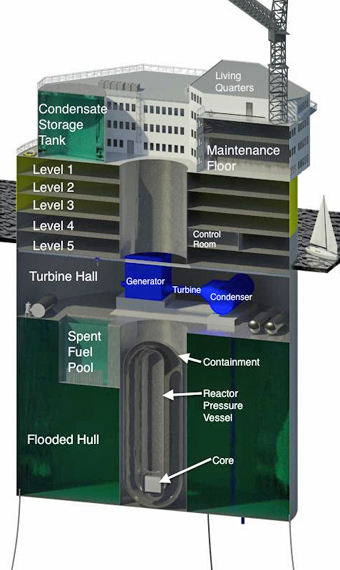 |
| The Bobbing Reactor. Credit: Jake Jurewicz/MIT-NSE |
With a small size and short construction time, these plants may quickly become competitive with other fossil fuels.
As noted by journalist
Michael Abrams, the safety aspect of this reactor is truly what makes it remarkable. As it will only be adhered to shore by the power cable, the reactor will have an unlimited heatsink along with virtually no chance of spreading contamination onto land. The reactor itself operates entirely within the submerged half of the rig, so the frigid ocean waters are constantly surrounding and cooling the reactor. Even if a power shortage were to occur, the ocean would still cool the reactor to prevent a meltdown.
Radioactive contamination is also scratched off the list of possibilities because, even if leakage should occur into the ocean, it would dilute radiation to a non-dangerous level in no time. Also, natural and unnatural disasters alike should have no impact on this remote, submerged reactor out in 100 meter deep waters.
My largest concern while reading this article was the effect this bobbing reactor might have on local marine life. Luckily, Buongiorno planned for this as well: the used cooling water will be returned to the surface of the sea at the same temperature as the water there, making this rig about as destructive as a cruise ship.
As long as we keep these rigs out of marine protected areas, there seems no better way to service large, ocean-side cities like LA, San Francisco, and San Diego.


